Listening to the Invisible
Last month’s Lessons From Mountains was about silence. This month, however, we’re looking at something that seems like its opposite:
Sound.
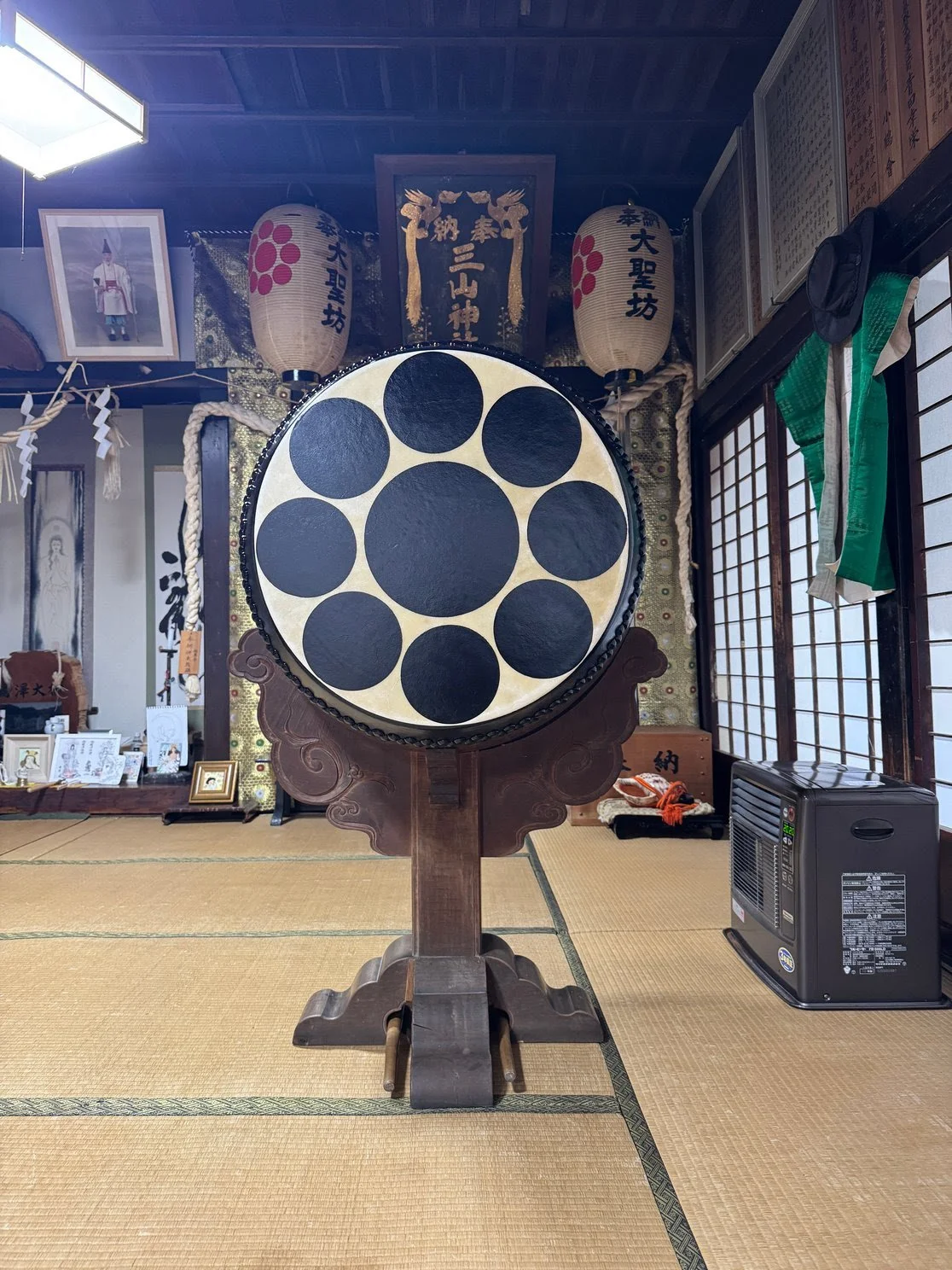
Daishobo's brand new drum skins before their 'christening'.
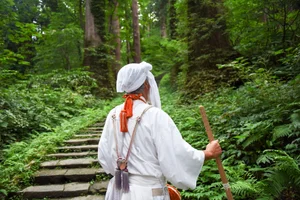
Yamabushi are big on the invisible. Especially on the Dewa Sanzan mountains, yamabushi training is one of the most direct ways of not only encountering the invisible, but learning from it.
Sound is an invisible force that has powerful repercussions. It has the power to transport us to another world, something we have understood for as long as we have been around. Early cave paintings were found to have been made in the spots with the best acoustics. Music, or at the very least sound, was very likely involved in their creation.
Sound is such a core part of the human experience, and the same is true for yamabushi, especially during rituals. Sound is the start of chanting. Getting the words or notes “right” isn’t so important. Before meaning there is vibration, breath, voice. Sound and intention are what really matter.
Traditionally, Buddhist monks and yamabushi learned sutras by ear and through repetition, with their bodies rather than from words on paper. Yamabushi kagura, a ritual of dance and music, has also been passed down orally through generations. Not to mention the taiko drums, furisuzu bells, horagai conches, and the shakujo staff that are all important tools for yamabushi.
In late December, we had a reminder of this with Master Hoshino in Daishobo’s main hall. Right in the middle of the room stood the taiko drum, not in its usual spot in the corner behind the shoji, but claiming pride of place in the main hall. For the first time in over 150 years, the drum had new skins, and a commemorative ceremony was about to begin. With Master Hoshino’s first strike, the reverberation of the drum transformed an ordinary room into a vessel for the invisible to work its magic.
Silence and sound are both invisible, yet they carry so much weight on the Dewa Sanzan mountains. We walk these mountains to encounter what cannot be seen, and notice something different in ourselves each time. Perhaps that is why many people going through deep loss feel a strong connection there, as if the mountains give form to something they can no longer see.
You cannot see sound. But you can definitely feel it.