The Silence the Snow Brings
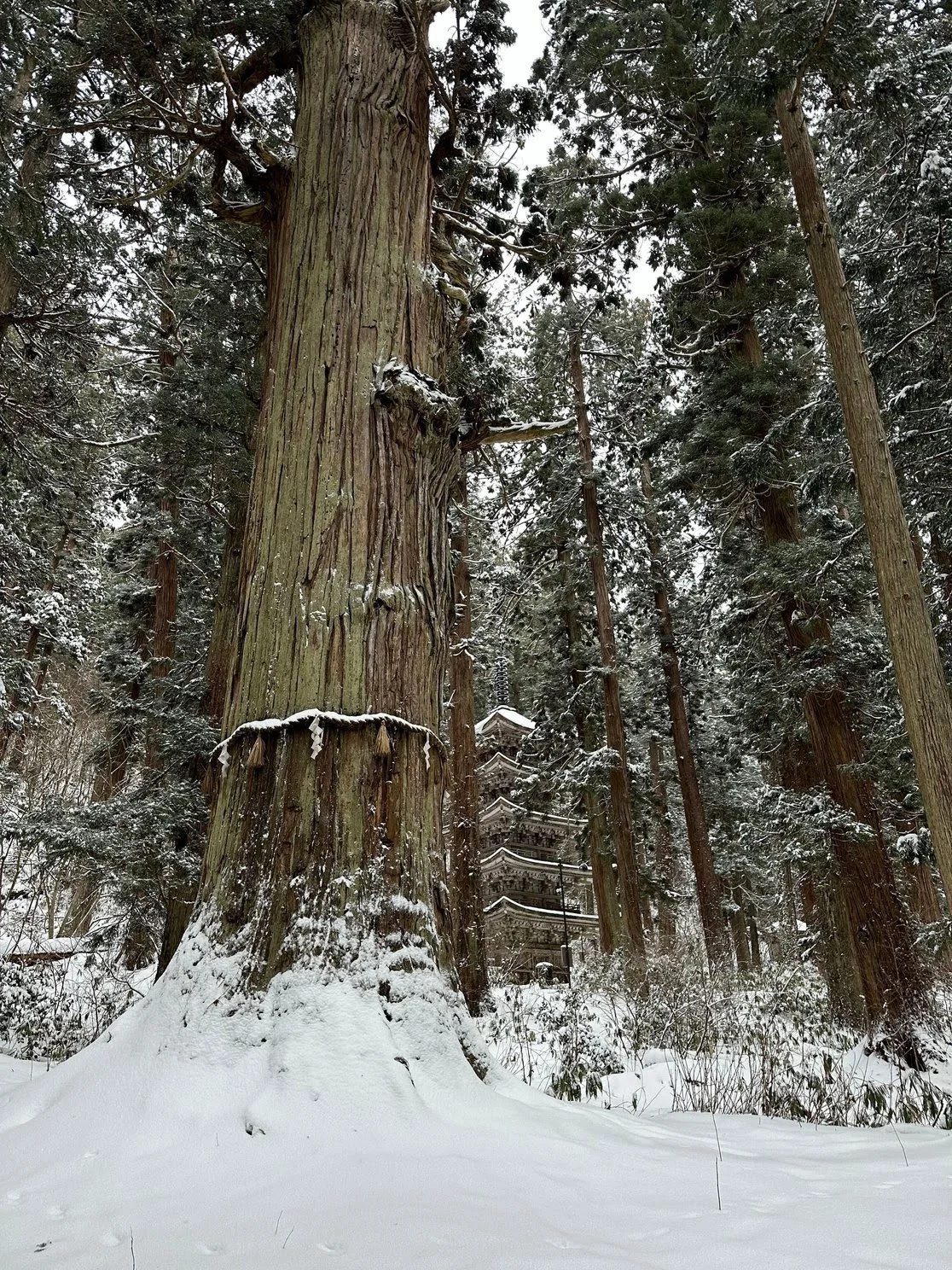
Haguro-san's Grandfather Cedar and Five Story Pagoda in the winter.
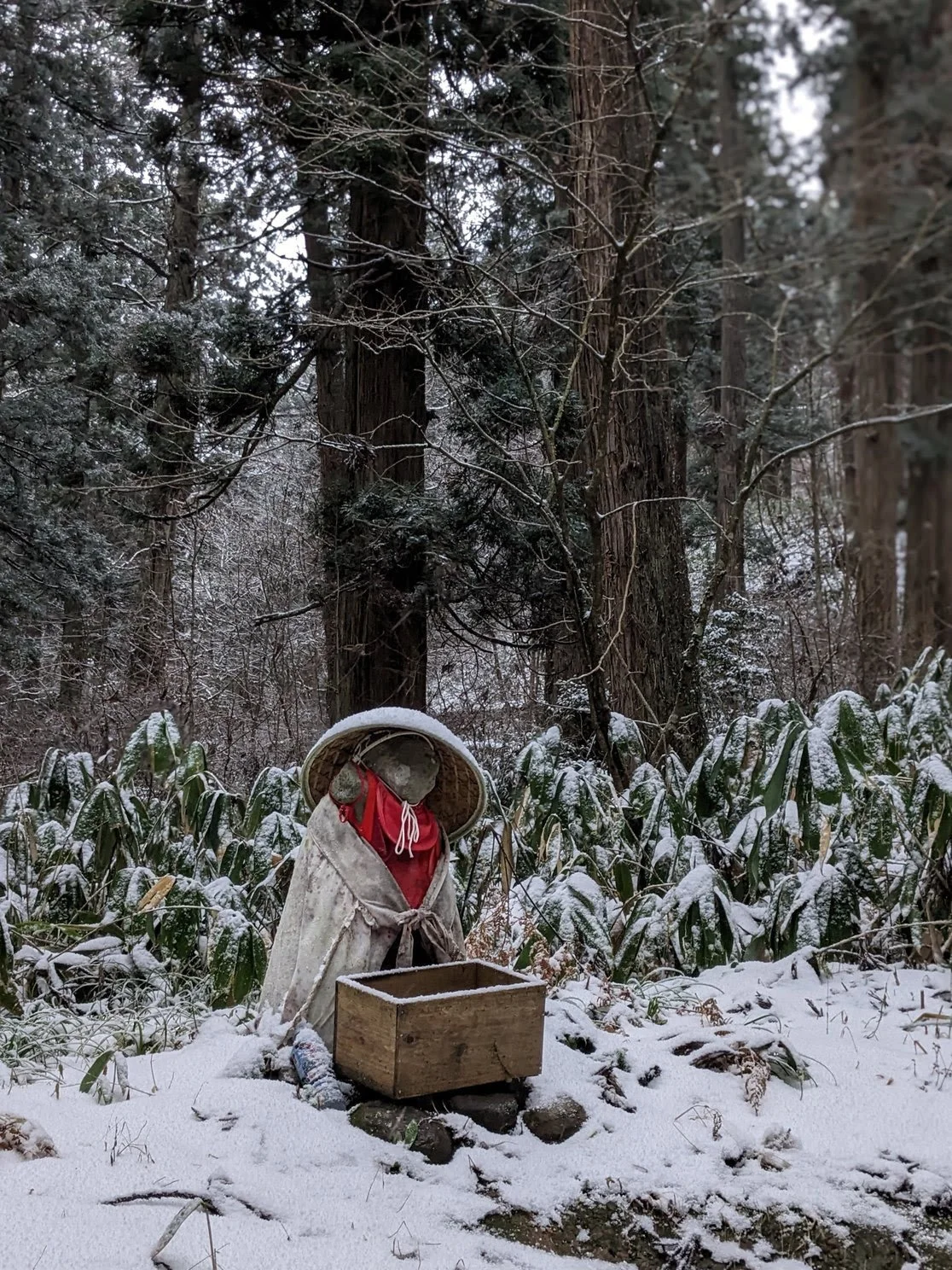
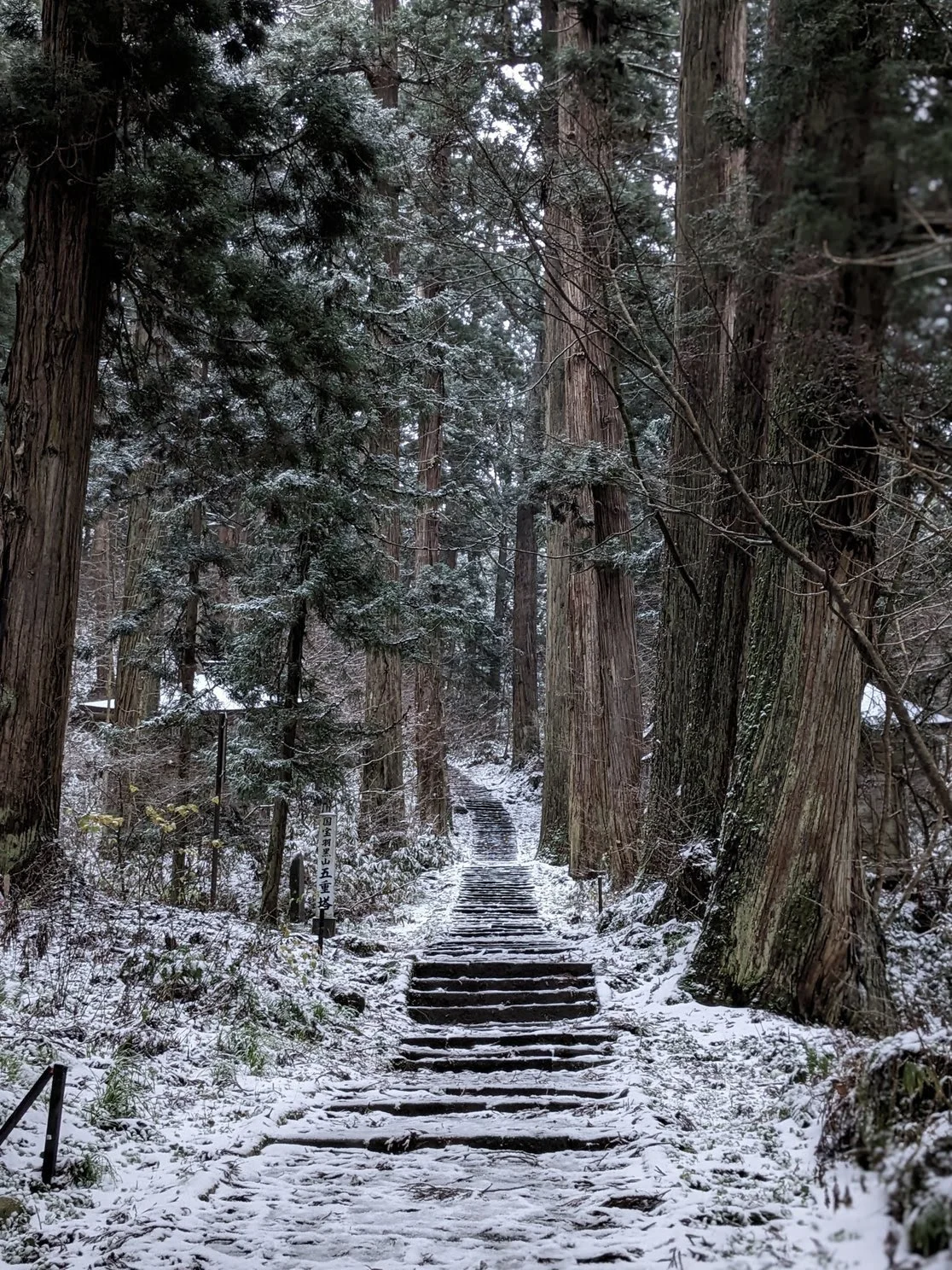
Wintertime on Haguro-san is magical. Only now can we witness the five-story pagoda standing strong against the swirling flurries, the cedar trees wrapping a white coat tight around their necks.
By summer, most of this snow will have vanished. The stone steps emerge again, the pagoda basks in sunlight under a canopy of green, and the forest comes alive.
But for the tallest of the Dewa Sanzan peaks, Gassan, this is by no means the case.
Even when the rice fields of the Shonai plains are awash with deep, shimmering green, the snow remains on Gassan. In the sultry Japanese summer it can be hard to believe that a wintry land still exists, or that the snow falling now will become our path in the future.
By July, the air on Mt. Gassan is warm enough that you don’t need gloves and can no longer see your breath. Warm wind on your face, winter at your feet. It is a surreal feeling, like stepping out of ordinary time for a moment, and the silence the snow brings makes it feel even more unreal.
For locals, that’s exactly what we’re doing.
In the Dewa Sanzan tradition, Gassan represents the world of the past, or the afterlife. Locals believe that our souls travel there when we pass away. By visiting Gassan in this world, we can meet our long-lost ancestors and atone for past misgivings.
Last July, we were crossing one of the snowfields on Gassan when Master Hoshino had a bit of a slip. The snow shifted and he went into an improvised dance to catch his balance. Master Hoshino noted that it is in those moments that our wilderness comes to the fore.
Next July, a small group of us will return to this snow for our seven‑day Masters Yamabushi Training. Over the week we go from Zen monasteries to mountain trails and finally to a quiet reflection in the cedar forests of Haguro. Some of the snow falling now may well be the very snow we walk on. We do hope you’ll join us, just reach out and ask.
Meanwhile, here are some shots from Gassan in the middle of summer, and Haguro-san in winter.