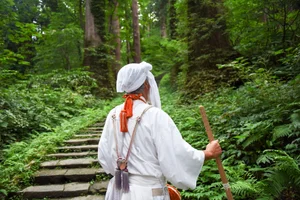
Nothing Without The Now: Haguro-san and The Fire Horse
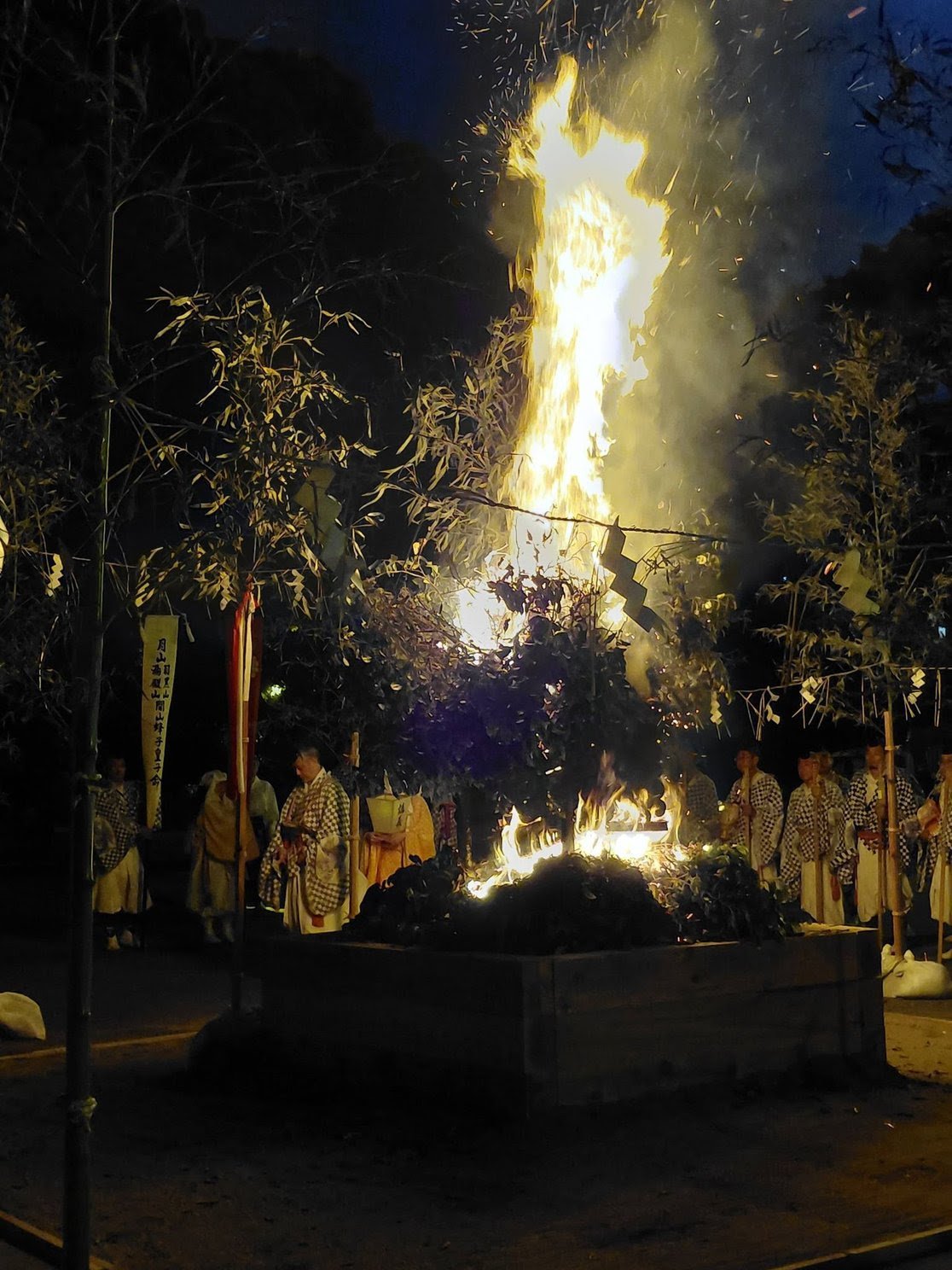
The Otaimatsu at Meiji Jingu.
Everyday commuters exchange confused glances as a plume of smoke billows out from the forest towards the ticket gates of Harajuku station. Like a dragon god ascending, like the souls of the ancestors being taken away, smoke rises into the Tokyo night, a symbol of the fleeting nature of our present life.
At the nearby Meiji Jingu, dozens of Dewa Sanzan yamabushi gather for a special occasion; a giant Osaito fire ritual, a fire ceremony normally performed deep in the mountains during the Akinomine Autumn’s Peak Ritual. And yet, to mark a once every 120-years occasion, Dewa Sanzan Jinja brought the event to central Tokyo.
Led by the 40 or so Matsuhijiri priests who have completed the 100-day Fuyunomine Winter’s Peak Ritual, more than 100 Satoyama yamabushi and Miko from all parts of Japan joined for the rare occasion of being together in the same robes, chanting the same prayers; Tenka Taihei, Peace under heaven. Kokudo Annon, Tranquility of the land. Banmin Keraku, Happiness for all people.
But why now?
In Dewa Sanzan lore, Haguro-san, the mountain of the present, is represented by the horse. 2026 is the year of the horse, and more specifically the Fire Horse, a cycle that hasn't overlapped with Haguro-san's year of founding since 1906. Fire symbolizes brightness, heat, and direction. Horses represent strength, movement, and the ability to travel great distances. Together they are one of the most restless, seemingly uncontrollable combinations in the entire 60-year cycle.
Prayer only has meaning when it returns to the here and now of everyday life. On that night the prayers weren't limited to the forest. They went where the people are. Our present life is just for a moment, and that is precisely why we live now.
The fire horse is entirely absorbed in how it moves. The fire horse is totally in the now. The fire horse is a mere reminder we are nothing without the now.
Here are some photos from the event.
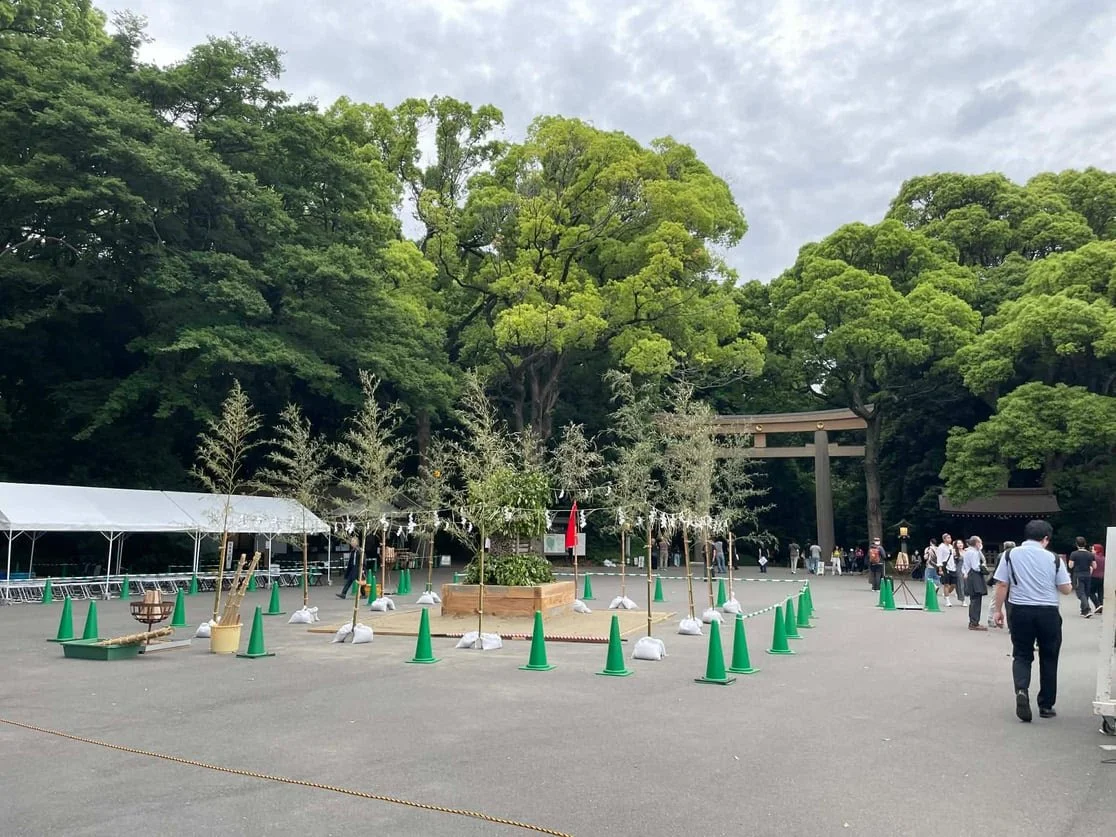
Preparing for the Otaimatsu fire ritual.
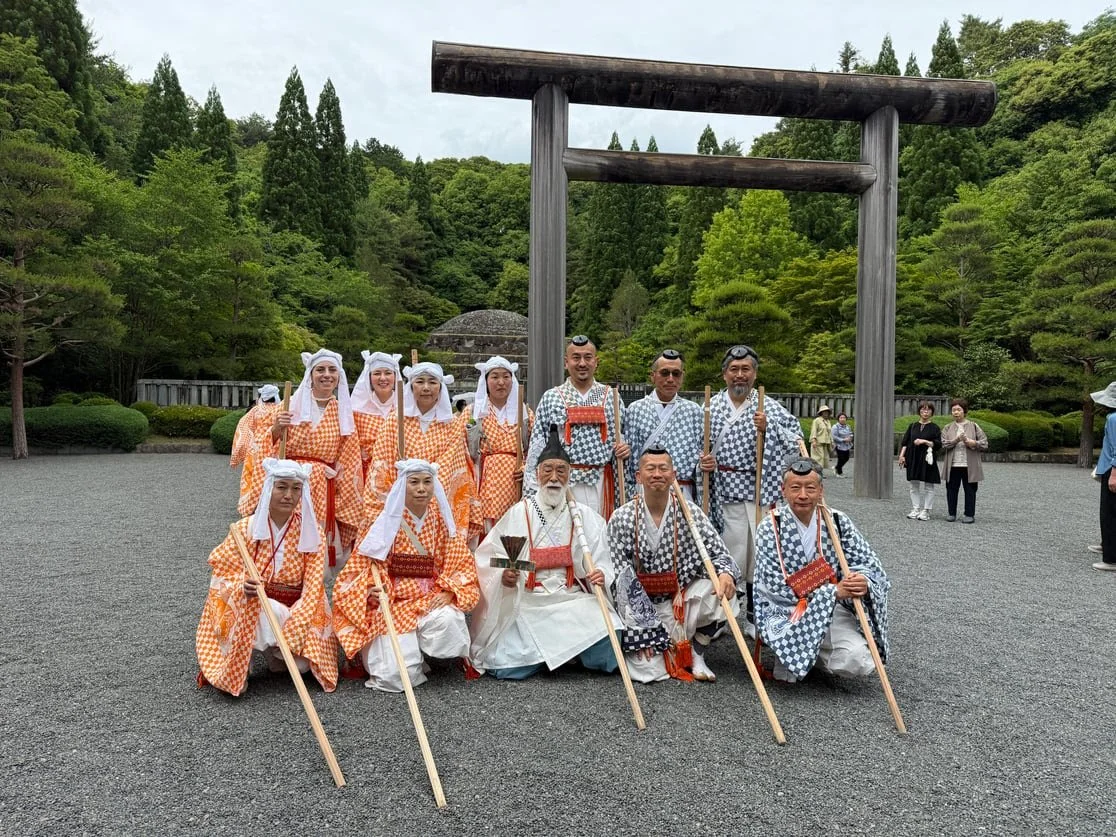
Yamabushi and Miko from Daishobo pilgrim lodge and Master Hoshino.
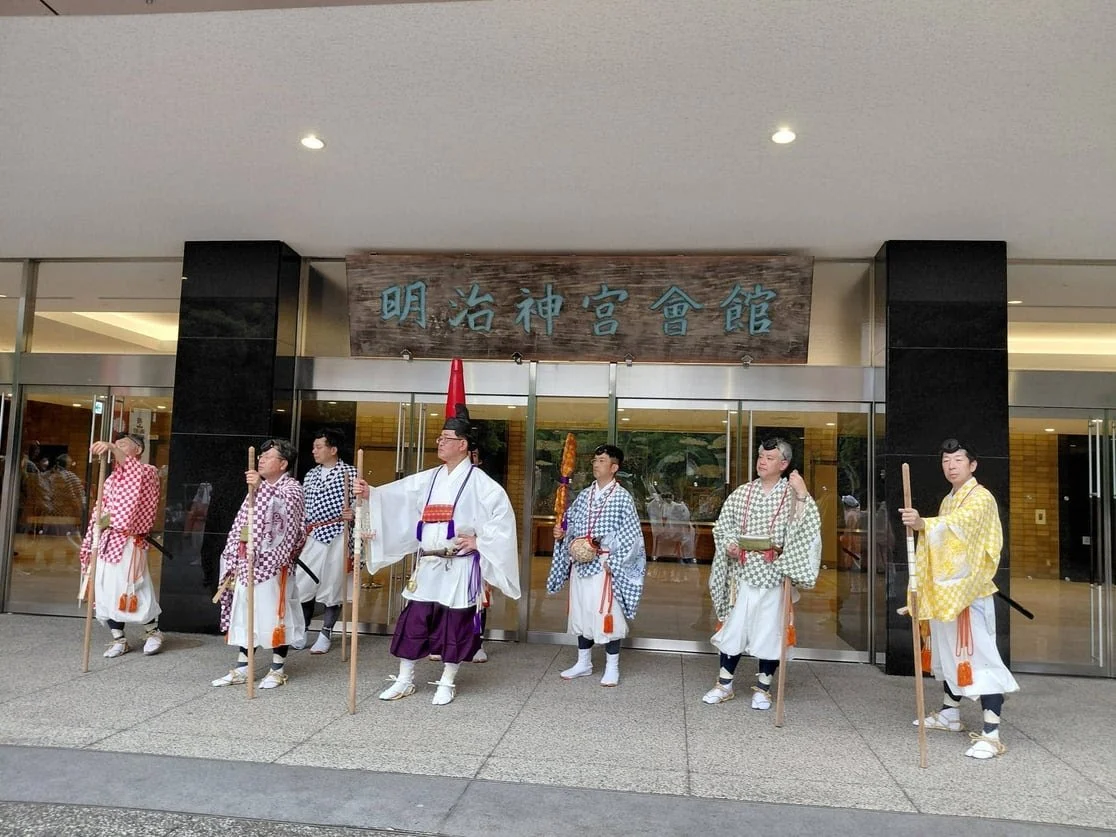
Sendatsu yamabushi leaders including Master Tsunaki Hoshino (Master Hoshino's son) and Master Kazuhiro Hayasaka of Daishinbo pilgrim's lodge.
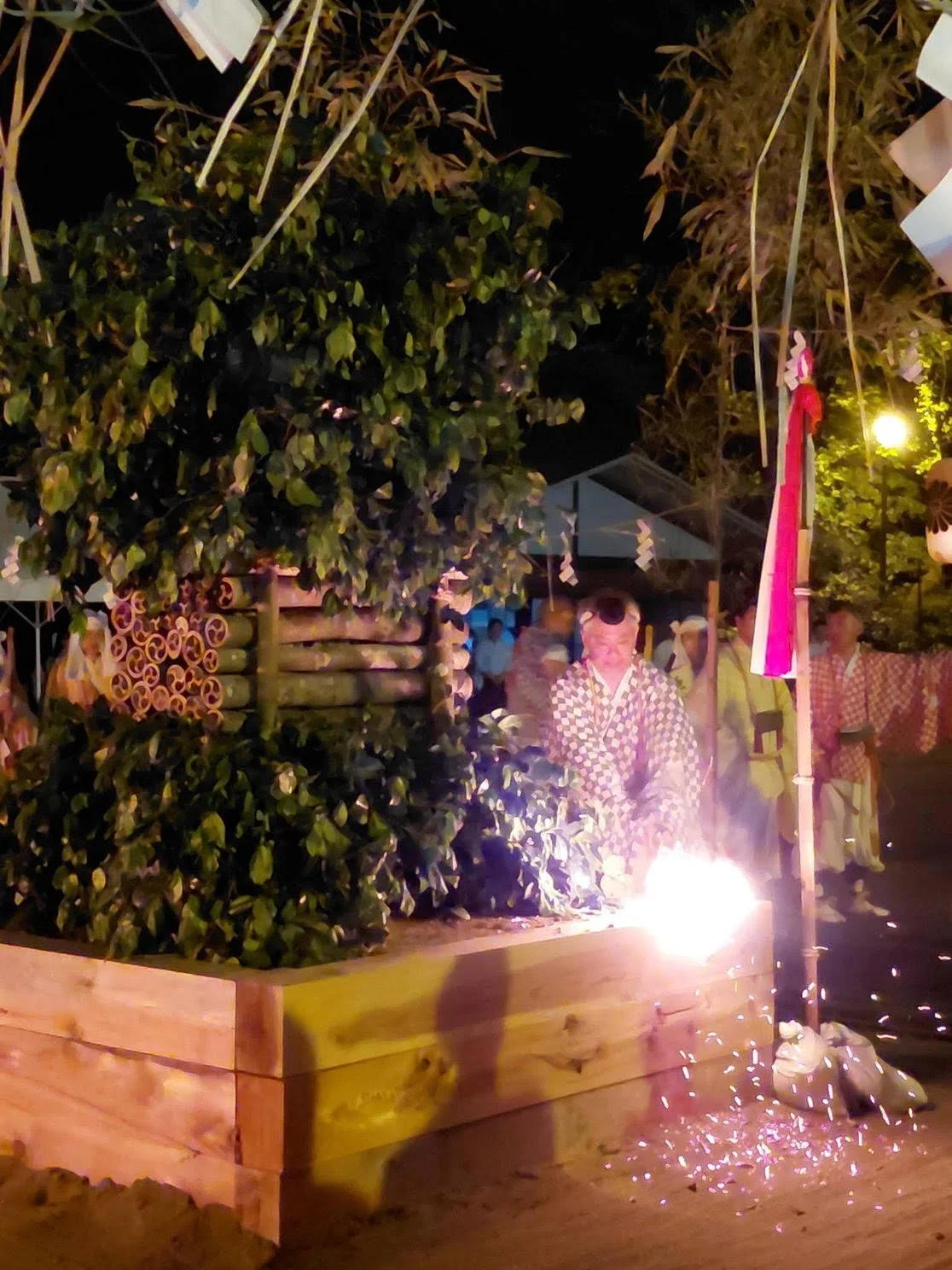
Master Hayasaka of Daishinbo lighting the flame.
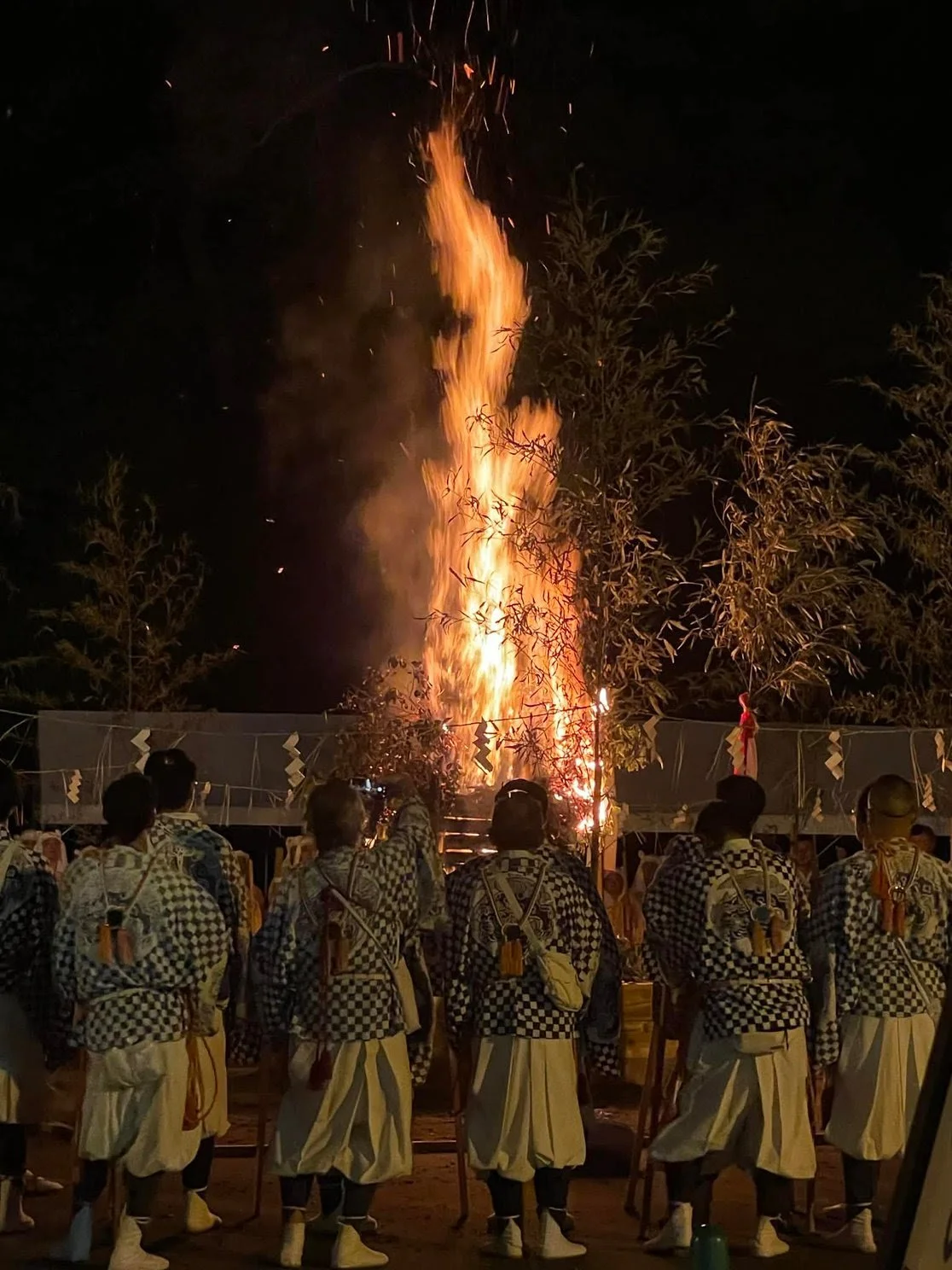
The Otaimatsu fire.