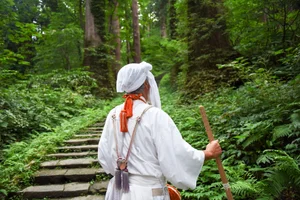
To The Mountains
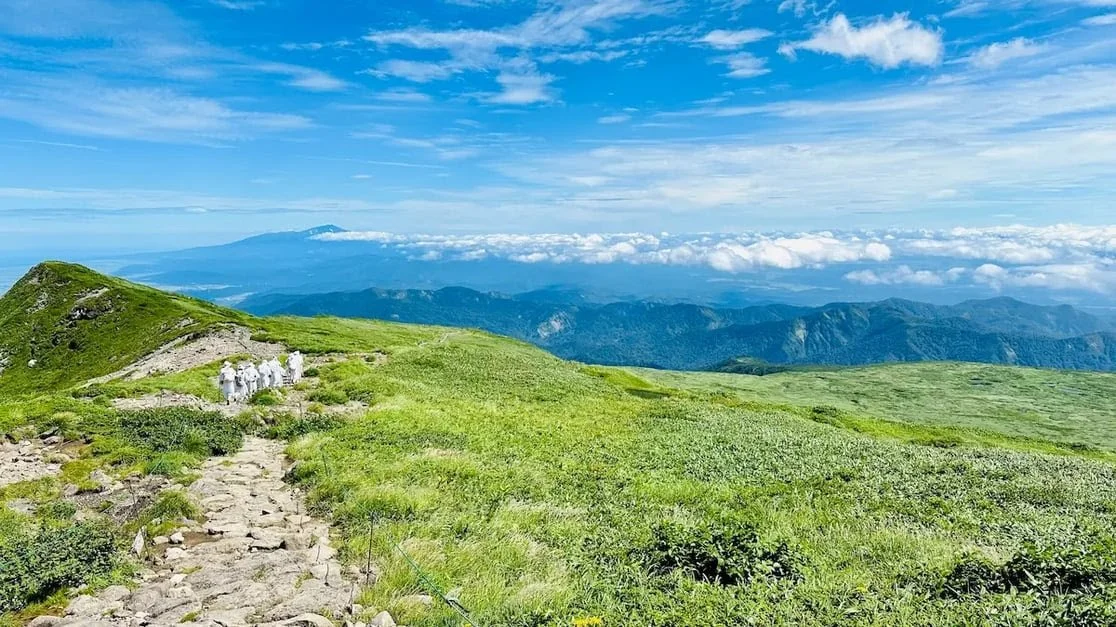
Yamabushido training on Mt. Gassan.
Where do we go when we die?
Death is an extremely sensitive topic, especially in many western countries. Yet in Japan, for many people, death is as much about life as life itself.
Why the discrepancy? In the West it seems we are afraid of death, so we try to do everything we can to avoid it, including talking about it. Japan, on the other hand, at least traditionally, tends to accept death as part of life. Master Hoshino mentions this whenever the topic of death comes up, his attitude is essentially: “One can’t exist without the other, so why worry about it?”
Japan’s long tradition of Buddhism providing a clear roadmap after death likely plays a huge role. Nowadays it seems many Buddhist temples are heavily focused on funeral rites. Many flower growers have been switching from wedding flowers to funeral flowers to keep up with demand, for example.
Then there is the role mountains play. As we know, mountains are a constant presence in the lives of the Japanese. About 70-80% of the country is mountains, and in many older beliefs, the taller mountains were seen as the place we go when we die.
Every time we climb mountains as yamabushi, we reflect on “the ancestors”, those who have come, and gone, before us. The dead, in other words. This also includes the people who had an untimely death. For many of us this could be a close loved one; a father, a mother, a brother, a sister, a child, or simply a friend. It could also be the victims of the 2011 Tohoku earthquake and tsunami, 15 years ago this month.
When yamabushi climb mountains we aren’t simply visiting the dead, we are walking the very same path as them. We feel their presence in the rocks, the plants, the mountain streams, and we let them know we are still with them. If you are carrying a loss, coming to the mountains can be a great way to walk with them again, even if only for a little while.
Where do we go when we die? To the mountains. Yamabushi return to these mountains time and again to train, to remember, and to walk the same paths as those who have gone before us.